

Description
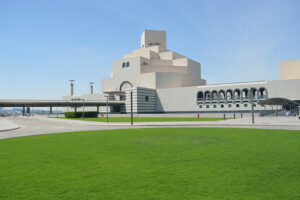
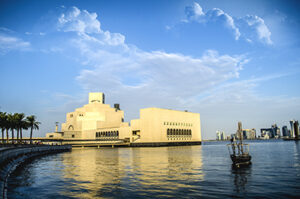
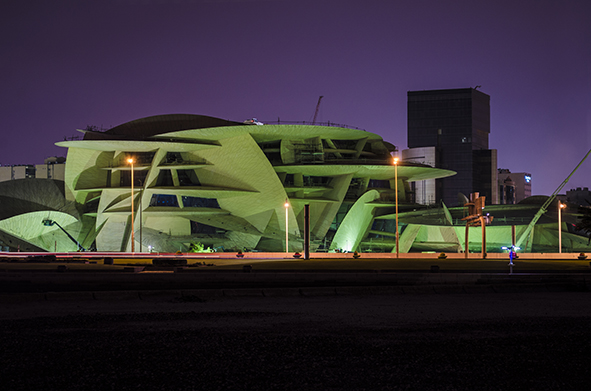
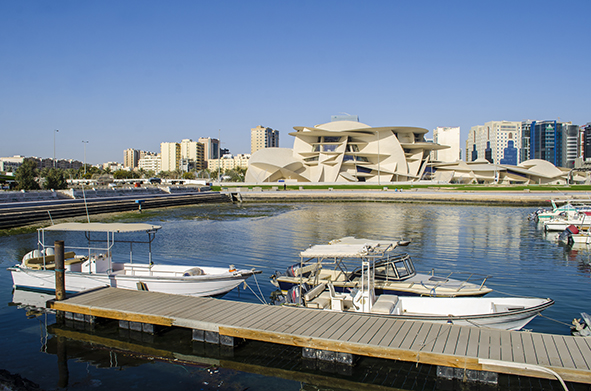
The National Museum of Qatar image captures a breathtaking view of one of the most iconic cultural landmarks in Doha, Qatar—the National Museum of Qatar (NMoQ). This remarkable architectural masterpiece, designed by renowned French architect Jean Nouvel, stands as a powerful symbol of Qatar’s fusion of tradition, heritage, and forward-looking aspiration. The image beautifully reflects the museum’s stunning design, which draws inspiration from a desert rose, a natural crystal formation found in the arid regions of the Gulf, resulting in an extraordinary visual form that seems to grow organically from the surrounding environment.
Beyond being an architectural marvel, the National Museum of Qatar embodies the story of the Qatari people, their history, culture, and identity. The structure consists of a series of interlocking discs arranged at different angles and diameters, creating dynamic shapes that evoke the intricate petals of the desert rose crystal. This bold architectural language both pays homage to local geology and reflects Qatar’s broader ambitions as a globally relevant cultural destination.
Officially opened to the public in March 2019, the museum was developed around the restored Palace of Sheikh Abdullah bin Jassim Al Thani, integrating historic preservation with contemporary design. The palace, which once served as the seat of government and residence of the ruling family, now forms a central and enduring element of the museum’s narrative, tying Qatar’s past directly to its present and future aspirations. National Museum of Qatar
Inside, the National Museum of Qatar houses a rich and immersive collection that spans natural history, geology, anthropology, and the evolution of Qatari society. Eleven major galleries guide visitors through a visually engaging narrative that begins with the earth’s geological foundations and leads through centuries of human settlement, economic evolution, cultural practices, and modern statehood. Through carefully curated exhibits, multimedia installations, and rare artifacts, the museum tells Qatar’s story as both a national and regional tapestry of life, tradition, and innovation. Visit Qatar
One of the most celebrated exhibits is the Pearl Carpet of Baroda, an iconic piece commissioned in 1865 that reflects the historical importance of pearls in the Gulf trade and culture. Other galleries explore traditional nomadic life, the pearl diving economy, the impact of oil and gas discovery, and the rapid transformation of Qatari society throughout the 20th and 21st centuries. These compelling displays make the museum not simply a repository of objects, but a living narrative of identity and progress. Visit Qatar
The museum’s surroundings further enrich the visitor experience. A landscaped park surrounds the building, offering spaces for outdoor cultural events, reflective leisure, and exploration of native plant species, blending leisure with learning in a harmonious setting. The area also includes dining spaces, cafés, and social gathering areas that encourage interaction and engagement beyond exhibition halls. National Museum of Qatar
The architectural design itself incorporates sustainability principles, with the desert rose-inspired form providing shade, passive cooling, and protection from the intense desert sun, making the building both visually and environmentally responsive. The National Museum of Qatar has been recognised for design excellence and iconic presence, drawing visitors from around the world and solidifying Qatar’s position as a global cultural hub. ARQA
As captured in this image, the National Museum of Qatar stands as more than a museum—it is a testament to Qatar’s heritage, creative vision, and cultural ambition. Whether featured in travel guides, architectural showcases, cultural narratives, or educational resources, this photograph conveys the sheer beauty, innovation, and significance of one of Doha’s most memorable landmarks. The image not only showcases extraordinary architecture but also invites viewers to explore the depth of Qatar’s story through space, form, and artistic expression.