


Description
The National Museum of Qatar stands as one of the most culturally significant and visually striking landmarks in the Middle East, embodying Qatar’s rich heritage and its bold vision for the future. Situated in Doha, this architectural marvel is inspired by the form of the desert rose, a natural crystal formation found in the region’s arid landscape. The museum’s sweeping curves, interlocking discs, and dynamic silhouette redefine contemporary design, making it a must-see destination for art lovers, architects, historians, and global travelers alike.
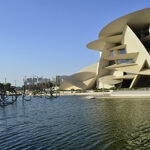
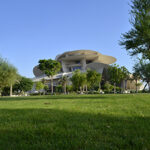
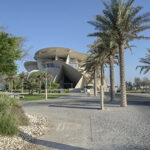
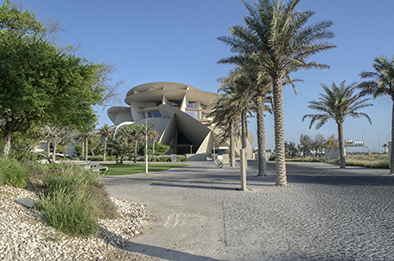
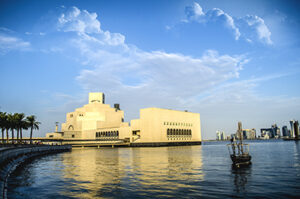
Designed by world-renowned architect Jean Nouvel, the National Museum of Qatar is a masterpiece of modern architecture that blends seamlessly with its desert context while symbolizing the nation’s cultural evolution. The building’s innovative structure evokes the layers of history that have shaped Qatar — from its ancient Bedouin roots to its modern role as a hub for education, research, and cultural exchange. This image captures the museum’s remarkable exterior, emphasizing its sculptural presence and monumental scale against the backdrop of Doha’s skyline and the Gulf’s shimmering waters.
The museum’s design is more than an architectural statement; it reflects the story of Qatar itself. Inspired by the desert rose formations that occur naturally in the region, the interwoven discs of the building suggest growth, fragmentation, and convergence — metaphors for the dynamic interaction between tradition and modernity. The National Museum of Qatar, therefore, becomes both a physical and symbolic bridge between past and present, inviting visitors to explore the layers of cultural memory that define the nation.
Within its walls, the museum houses an exceptional collection that spans archaeology, natural history, ethnography, and contemporary art. Exhibits delve into the heritage of the Qatari people, charting their journey from nomadic desert life to the vibrant cosmopolitan society of today. Highlights include ancient artifacts, historic manuscripts, interactive installations, and multimedia presentations that bring stories of exploration, discovery, and cultural identity to life. The narrative journey through the museum is designed to be immersive, engaging audiences both intellectually and emotionally.
The National Museum of Qatar also places a strong emphasis on educational programming and community engagement. Workshops, lectures, guided tours, and special exhibitions provide opportunities for learners of all ages to connect with the region’s history and creative expression. Whether for families, school groups, researchers, or tourists, the museum’s offerings encourage curiosity and dialogue, fostering a deeper appreciation for cultural heritage and artistic innovation.
Visually, the image conveys the clarity, dynamism, and elegance of the museum’s architecture. The sweeping lines and layered forms catch the light in dramatic ways, creating shadows and highlights that accentuate the structure’s sculptural qualities. The composition captures a sense of movement and growth, reinforcing the idea that architecture can serve as both an artistic creation and a narrative vessel. This makes the image ideal for editorial use, architectural features, travel publications, and cultural showcases.
For interior design and commercial spaces, this image works beautifully as a focal piece that communicates sophistication and cultural depth. It adds contemporary elegance to corporate offices, academic institutions, cultural centers, and private collections. The aesthetic harmony of form and meaning makes it particularly well suited to environments that value creativity, education, and visionary design.
In a broader cultural context, the National Museum of Qatar reflects Qatar’s commitment to preserving its past while embracing innovation and global collaboration. The museum is not only a repository of artifacts but also a living forum for exchange, learning, and collective memory. Its presence on the Doha waterfront reinforces the city’s identity as a global cultural capital — a place where ideas converge and where history is both honored and reinterpreted for new generations.
The image of the National Museum of Qatar thus becomes more than a depiction of a landmark; it embodies a compelling visual narrative of identity, progress, and meaning. It celebrates architectural excellence, cultural continuity, and the enduring human impulse to understand one’s origins while imagining new futures.
This photograph, with its strong visual impact and symbolic resonance, is valuable for a wide audience, including travelers, educators, students, architects, designers, and cultural enthusiasts. It elevates storytelling in travel guides, architectural journals, exhibition catalogs, and cultural newsletters, reinforcing the museum’s role as a beacon of learning and inspiration.
Whether featured in a fine art collection, editorial portfolio, or cultural archive, the image of the National Museum of Qatar captures the imagination and invites reflection on how architecture, history, and identity intersect in the modern world.


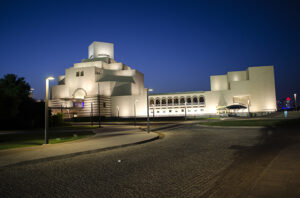
 Fishing Boat, Harbor in West-bay, Doha-Qtar DSC7299
  Arabic & Indian Dish PAG F0001A
 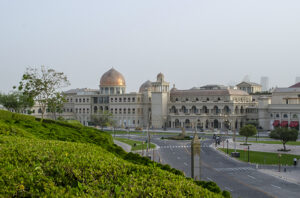 The Katara cultural village - Katara Hill, Doha-Qatar DSC8906
  National Museum of Qatar, Doha-Qatar 5723
 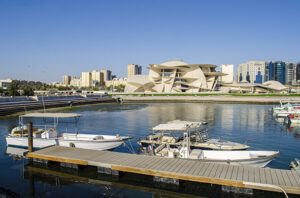 National Museum of Qatar, Doha-Qatar 4578
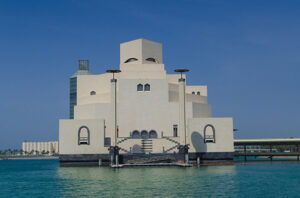
 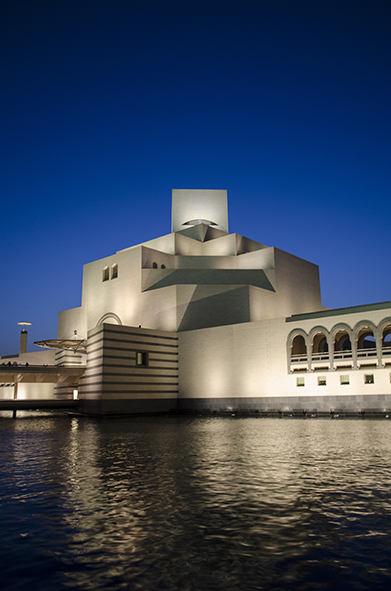 The Museum of Islamic Art, Doha-Qatar 5424
  'Orry' Statue at the West Bay City skyline of Doha- Buildings- Qatar 5352