


Description
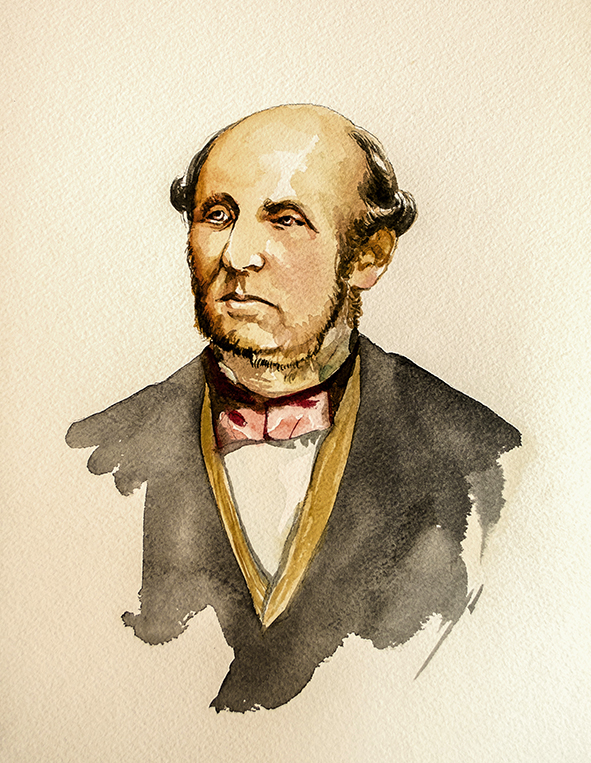
Plastic Scientist Alexander Parkes Inventor of Parkesine, represents one of the most transformative figures in the history of modern materials science. This compelling visual tribute honors the British inventor whose groundbreaking discovery in the 19th century laid the foundation for the global plastics industry. Alexander Parkes is widely recognized as the creator of Parkesine, the world’s first man-made plastic, a revolutionary material that changed manufacturing, design, and industrial production forever.
Born in 1813 in Birmingham, England, Alexander Parkes was a metallurgist and inventor whose curiosity and experimentation led him to explore new chemical compounds and industrial processes. His most significant achievement came in 1856, when he patented Parkesine, a material derived from cellulose treated with nitric acid and solvents. This innovation marked the beginning of synthetic plastics, introducing a moldable substance that could be shaped when heated and hardened when cooled — a concept that would eventually transform countless industries.
The legacy of Plastic Scientist Alexander Parkes Inventor of Parkesine extends far beyond a single invention. Parkesine was first publicly displayed at the Great International Exhibition in London in 1862, where it captured attention for its versatility and decorative potential. Although commercial production faced challenges at the time, Parkes’ invention paved the way for later developments such as celluloid and modern polymers. His work established the scientific principles that would eventually give rise to the plastics revolution of the 20th century.
From a historical perspective, Alexander Parkes stands among the pioneers who bridged chemistry and industrial innovation. His experiments were not limited to plastics alone; he also contributed to advancements in electroplating, waterproofing, and metallurgical processes. However, it is his role in creating the first synthetic plastic that secured his place in scientific history. The development of Parkesine demonstrated that organic materials could be chemically transformed into durable, adaptable substances suitable for manufacturing.
The story of Plastic Scientist Alexander Parkes Inventor of Parkesine is particularly significant because it marks the beginning of a new era in materials engineering. Before the invention of synthetic plastics, industries relied heavily on natural materials such as wood, ivory, horn, and metal. Parkes’ discovery introduced a material that could mimic natural textures while offering greater flexibility and affordability. This breakthrough would later influence industries ranging from automotive production and electronics to fashion, medicine, and consumer goods.
Visually and conceptually, imagery dedicated to Alexander Parkes represents innovation, experimentation, and scientific courage. It symbolizes the moment humanity learned to engineer materials at a molecular level, reshaping the possibilities of design and manufacturing. Educational institutions, science museums, research centers, and academic publications frequently reference Parkes as a foundational figure in polymer chemistry and industrial history.
In contemporary discussions, plastics play a complex role in society — celebrated for their versatility and criticized for environmental impact. Understanding the origins of plastics through figures like Parkes provides essential context for modern sustainability efforts. The invention of Parkesine was not merely a technical milestone; it was the beginning of a material revolution that continues to evolve through biodegradable polymers, recycling technologies, and advanced composites.
The enduring relevance of the Plastic Scientist Alexander Parkes, Inventor of Parkesine, lies in his visionary approach to science. His willingness to experiment with new chemical formulations demonstrated a forward-thinking mindset that shaped modern manufacturing. By transforming cellulose into a moldable synthetic material, Parkes initiated a global transformation in how products are created and consumed.
In summary, Alexander Parkes remains a pivotal figure in scientific and industrial history. His invention of Parkesine stands as the foundation of the plastics industry and a testament to human ingenuity. Recognizing the achievements of Plastic Scientist Alexander Parkes, inventor of Parkesine, allows us to appreciate the origins of modern materials science and the profound influence of innovation on global progress.






 The Museum of Islamic Art, Doha-Qatar 2569
  Arab pattern-Qatar culture-Traditional fabric Pattern 7685940321
  Arabian Horses of Souq Waqif, Doha - Qatar PAG32450
  Arabian Horse PAG32451
  The Museum of Islamic Art, Doha-Qatar 0147