



Description
Eric Fawcett, Professor of Physics, Science for Peace Founder, represents an inspiring tribute to intellectual courage, academic excellence, and humanitarian leadership. Born in Blackburn in 1927, Eric Fawcett devoted his life not only to advancing physics but also to promoting global responsibility through scientific awareness and ethical engagement. His legacy bridges the worlds of academic research and social activism, demonstrating that science carries both knowledge and responsibility.
As a distinguished Professor of Physics, Eric Fawcett made significant contributions to solid-state physics and materials research. His academic career was defined by analytical precision, deep theoretical understanding, and a commitment to mentoring future generations of scientists. Through lectures, publications, and collaborative research, he helped expand the understanding of magnetic materials and condensed matter physics, influencing students and colleagues across institutions.
Beyond the laboratory and classroom, Eric Fawcett believed that scientists must engage with society. He co-founded the organisation Science for Peace, a movement dedicated to raising awareness about the social and political implications of scientific advancements. At a time when nuclear research and technological progress raised profound global concerns, he advocated for responsible science rooted in peace, ethics, and humanitarian values. His work emphasized that scientific progress should serve humanity rather than threaten it.
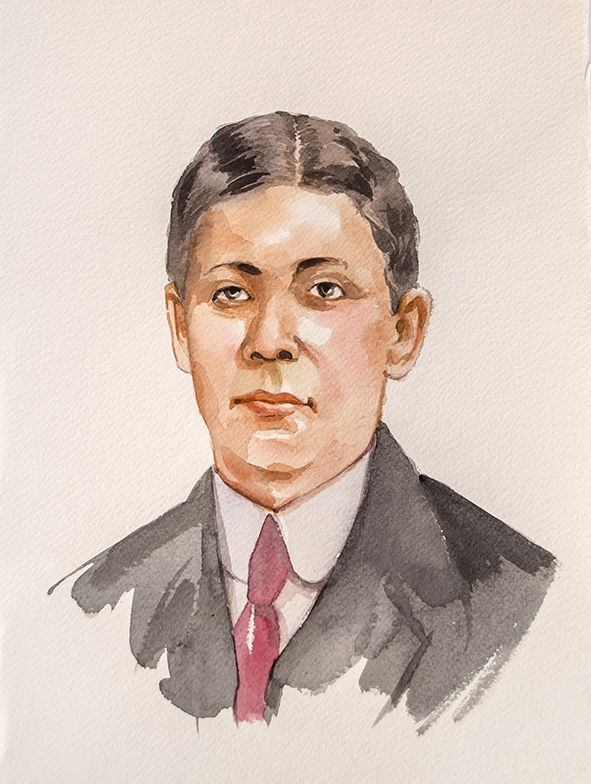
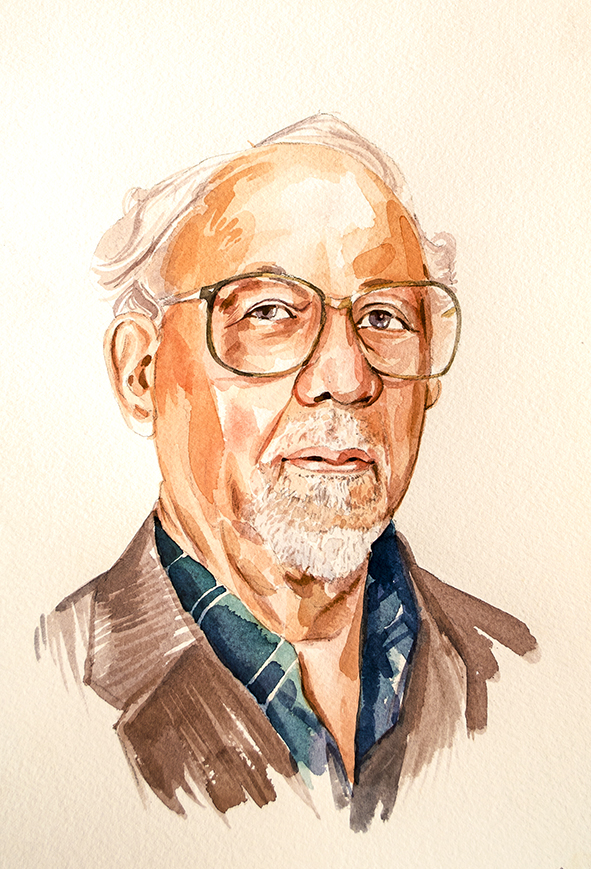
This artwork captures both the intellectual strength and moral conviction of Eric Fawcett. The composition blends subtle scientific symbolism—atomic structures, wave patterns, and abstract representations of magnetic fields—with calm, balanced tones that reflect wisdom and thoughtful leadership. The visual harmony mirrors his philosophy: science and peace must coexist. Structured lines and layered elements represent the precision of physics, while soft gradients symbolize hope and global unity.
Eric Fawcett’s contributions to physics were grounded in curiosity and discipline. His research into the magnetic properties of materials helped deepen scientific understanding during a transformative era in modern physics. At the same time, his advocacy work highlighted the ethical dimensions of scientific discovery. He believed that knowledge must be guided by conscience, and that scientists should actively participate in discussions about global security and social responsibility.
The legacy of Science for Peace continues to resonate in today’s world, where technological advancements evolve rapidly. Artificial intelligence, nuclear science, and emerging technologies present both opportunities and challenges. Eric Fawcett’s message remains relevant: science must prioritize human welfare, international cooperation, and peaceful solutions. His life stands as proof that academic excellence and civic responsibility are not separate paths, but complementary missions.
This portrait artwork is ideal for universities, research institutions, academic offices, and educational environments. It serves as a reminder to students and scholars that intellectual achievement carries ethical responsibility. The contemporary design ensures it complements modern interiors while conveying historical and intellectual depth.
Collectors who value meaningful scientific heritage will appreciate the symbolic richness embedded in this piece. It honors a physicist who extended his influence beyond equations and experiments into advocacy and global dialogue. The artwork becomes more than a portrait—it becomes a statement of values.
Eric Fawcett, Professor of Physics,s Science for Peace Founder symbolizes the unity of science, education, and humanitarian purpose. It celebrates a life dedicated to understanding the physical world while striving to improve the human one. His story inspires future scientists to pursue knowledge with integrity, courage, and compassion.
For those seeking artwork that reflects intellectual leadership and ethical vision, this piece offers historical depth, academic inspiration, and timeless relevance. It stands as a tribute to a professor who believed that science must ultimately serve peace.