

Description
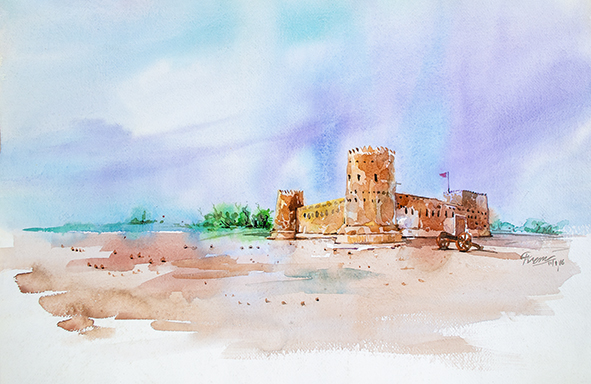
Zubarah Fort, Al Zubara, UNESCO World Heritage Site, Qatar, stands as a striking testament to Qatar’s deep cultural heritage and its historical prominence on the Arabian Peninsula. Perched in the north-western reaches of the Qatari desert, this iconic fortress anchors the ancient town of Al Zubarah — once a thriving center of pearling, trade, and coastal life in the Gulf region. Today, the fort and its surrounding archaeological site offer visitors a rare glimpse into a remarkable past, where desert winds, ocean horizons, and centuries of human endeavor converge.
Constructed in 1938 under the direction of Sheikh Abdullah bin Jassim Al Thani, Zubarah Fort was originally built as a military and coastal defense structure. Built from coral rock, limestone, and traditional materials, the fort’s stout walls, watchtowers, and internal courtyard reflect a blend of regional architectural techniques adapted to harsh desert conditions. Over time, the fort has evolved into a cultural museum that presents visitors with invaluable archaeological artifacts and historical narratives on the surrounding ancient settlement.
The fort’s location at the edge of the once-bustling town of Al Zubarah underscores the pivotal role the region played in Gulf maritime trade during the 18th and early 19th centuries. Founded by traders from Kuwait, Al Zubarah flourished as a fortified coastal town engaged in pearl fishing, commerce, and international exchange across the Indian Ocean and Persian Gulf. At its peak, the settlement sustained a complex urban fabric of markets, mosque ruins, residential houses, defensive walls, and water channels — now preserved under centuries of desert sand.
In 2013, the Al Zubarah Archaeological Site, including Zubarah Fort, was designated a UNESCO World Heritage Site — the first location in Qatar to receive this international honor. The designation recognizes the site’s outstanding universal value as an exceptionally well-preserved example of an 18th-century urban coastal settlement that was deeply connected to pearling, trade, and regional networks long before the emergence of modern Gulf cities.
Walking through the sandy remains of the old town, visitors encounter traces of ancient buildings, mosques, defensive walls, and remnants of a harbour that once facilitated vibrant seafaring activities. The desert wind continues to shape the landscape, gently covering ancient street layouts that speak to the rhythms of everyday life centuries ago. The juxtaposition of remnants beneath broad desert skies evokes a sense of timelessness, inviting reflection on how civilizations rose, interacted with the environment, and ultimately transformed.
Zubarah Fort itself now serves as both a historical anchor point and an interpretive center for the larger archaeological context. Inside its walls, carefully arranged exhibit rooms house artifacts uncovered during excavations — from tools and domestic items to relics from the pearl-trading era. These exhibits help illuminate the social, economic, and cultural dynamics of a community that once stood at the crossroads of regional commerce.
The desert setting amplifies visitors’ sense of discovery. Sweeping horizons of dunes and ancient stone echo the ebb and flow of life that once defined the region’s relationship with both sea and sand. Guided tours and interpretive signage help contextualize the site’s significance, fostering a deeper appreciation of Qatar’s heritage and its interconnected role in the broader history of the Gulf.