
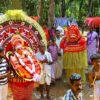

Description
Warrior Goddesses
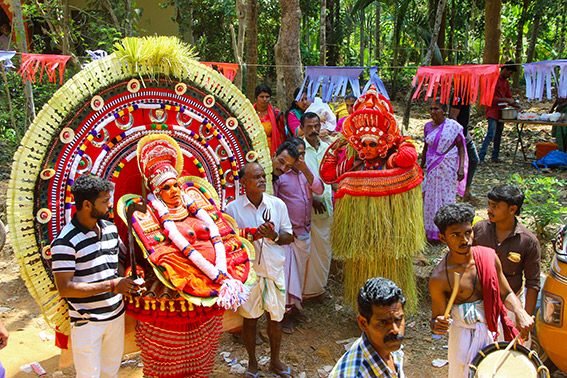
In the ritual traditions of North Kerala, several powerful female deities such as Kali, Chamundi, and Bhagavathi are believed not only to be destroyers of demonic forces but also divine beings who actively took part in earthly battles and conflicts. According to local belief, goddesses like Ankakulangara Bhagavathi, Raktha Chamundi, Chooliyar Bhagavathi, Moozhalam Kuzhi Chamundi, and Oravankara Bhagavathi, along with male warrior deities such as Kshetrapalakan, Vairajathan, Vettaykkoru Makan, Pada Veeran, and Vishnumoorthi, all participated in mythic wars to protect righteousness and restore balance.
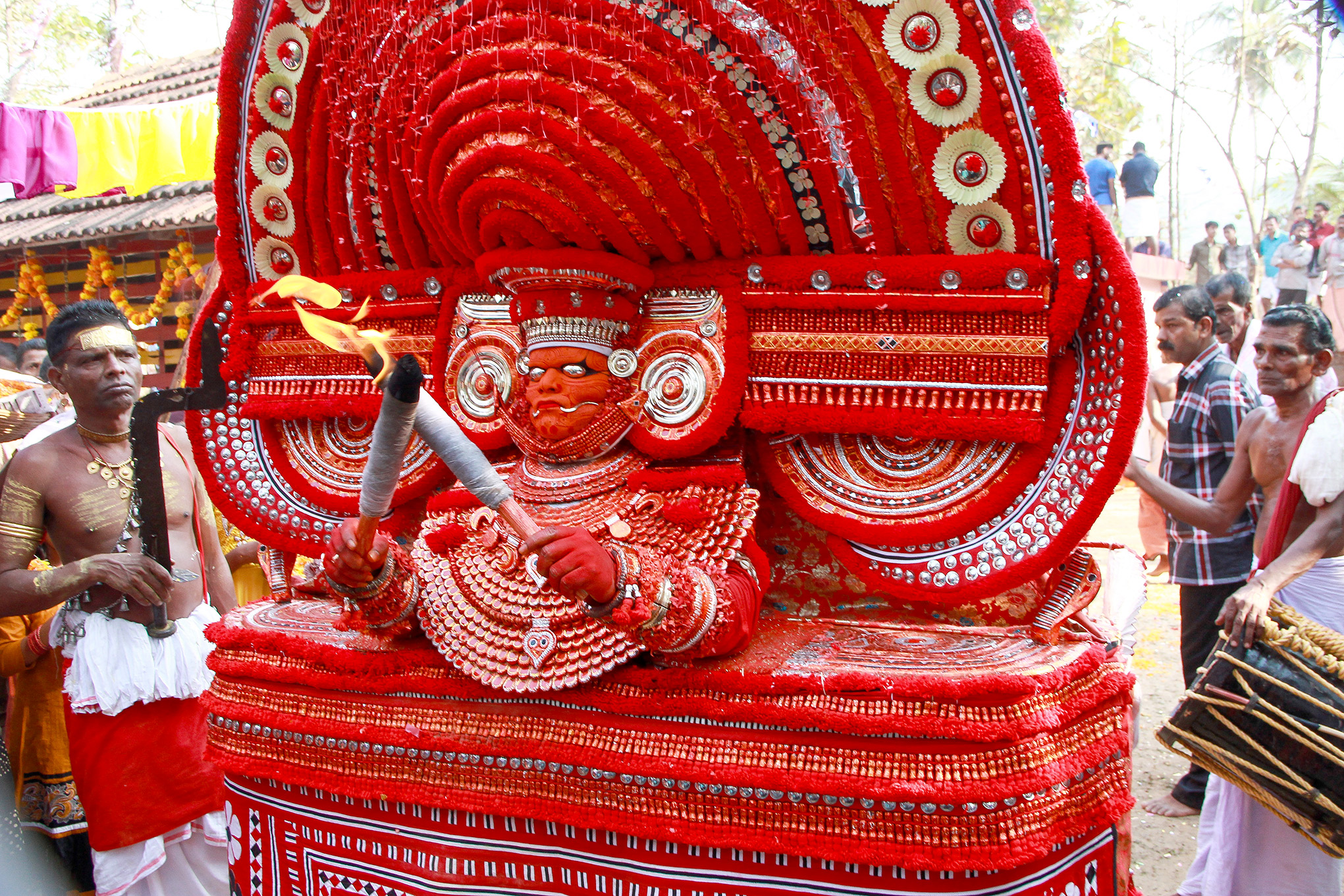
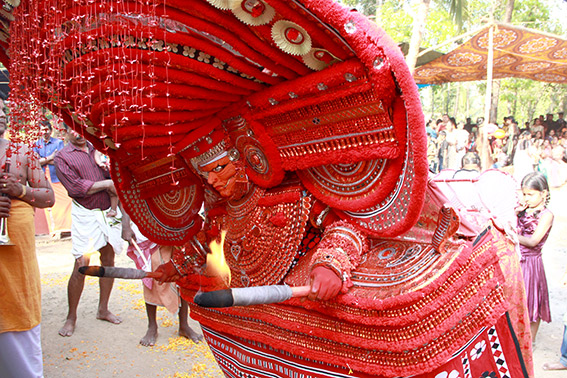
During a stage of the ritual performance known as uranjaattam, certain Chamundi Theyyams appear wearing a boar-faced mask. These include Madayil Chamundi, Kundora Chamundi, Karimanam Chamundi, and Chamundi (Vishnumoorthi form). Because of this animal symbolism, these forms of Chamundi are sometimes also grouped among deities associated with animal energy and primal protective forces.
Chamundi (Kali) and Raktha Chamundi
Chamundi is believed to have emerged from the divine eye of Goddess Durga to destroy the demons Chandan and Mundan. After defeating them, she also destroyed the powerful demon Raktabeeja, earning the name Raktha Chamundi (“the blood-soaked Chamundi”). In another legend, the same divine mother took the form of Chamundi to defeat the demon Ruru. Using her trident, she separated his head and skin from his body and destroyed him. Because she carried these as symbols of victory, she came to be known again as Chamundi. The idol installed at the Thirumandhamkunnu Temple represents the goddess in this fierce form.
Raktha Chamundi is also believed to be a fierce manifestation of Bhadrakali, born as a partial incarnation of Goddess Parvati. She is the principal clan deity of the Moovari community and is also worshipped under the name Ayiram Thengil Chamundi. Traditionally, this Theyyam is performed by the Malayan community.
A popular legend connects the goddess to a time when severe floods devastated the hill regions, and famine spread across the land. The local people approached Kolathiri Thampuran, their ruler, for help. The king prayed deeply to Annapoorneshwari, the goddess of nourishment. In response, the goddess, along with six mother goddesses, arrived by boat carrying seeds of tubers and paddy to restore fertility to the land. They reached the shore at Ayiram Thengil, where the king and his attendants welcomed them with reverence and performed rituals.
After drinking tender coconut water offered to quench her thirst, Annapoorneshwari threw away the coconut shell. When the shell rolled and stopped at a nearby place, she declared that she wished to reside there. Thus, a temple was established for her at Cherukunnu. Among the accompanying goddesses, Raktha Chamundi became especially dear to the Moovari community, who traditionally gathered flowers for temple worship, and she eventually became their family deity.
The Legend of Raktabeeja
Another story describes the demon Raktabeejasura, who, along with Mahishasura, was born from the funeral pyre of the mighty demon Shambhasura. Through intense penance, Raktabeeja received a boon from Lord Shiva that whenever a drop of his blood fell to the ground, countless warriors would arise from it to fight on his behalf.
During the great war between the gods and demons, Goddess Mahakali, born from Parvati’s energy, cut off Raktabeeja’s head and prevented his blood from touching the earth by drinking every drop before it fell. With her long tongue and body drenched in blood, this terrifying yet protective form became known as Raktha Chamundi.
Because blood (uthiram) holds special ritual significance in her worship, she is also called Uthira Chamundi. The goddess is known by many regional names, including Neelamkai Chamundi, Raktheswari, Kuppol Chamundi, Ayiram Thengil Chamundi, Kuttikkara Chamundi, Kizhakkera Chamundi, Kuthirakali, Periyatt Chamundi, Karel Chamundi, Chalaiyil Chamundi, Plavadukka Chamundi, Edappara Chamundi, and Veera Chamundi—each reflecting local traditions and forms of devotion.



 The West Bay City skyline of Doha- Buildings- Qatar 4978