

Description
Vishnumoorthi Theyyam (Paradevatha), Thee Chamundi, and Ottakkolam
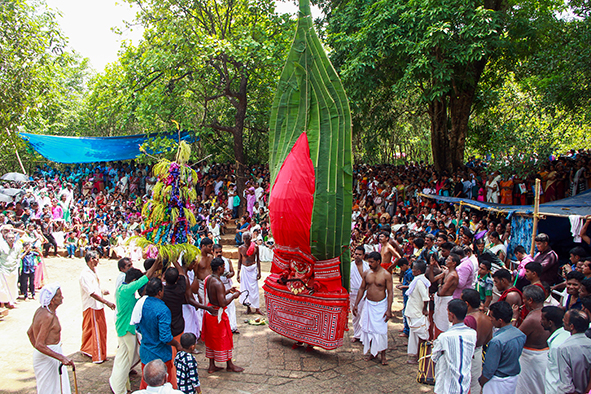
Vishnumoorthi Theyyam, also known as Paradevatha, represents the fierce Narasimha incarnation of Lord Vishnu and is widely performed in the sacred groves (kavus) and ritual centers of North Malabar. This powerful theyyam is deeply connected to the legend of Palantayi Kannan, a young cowherd who worked for Kuruvadan Kurup of Nileshwaram. Even today, Theyyam is performed in Kannan’s name in some places, reflecting the lasting devotion associated with his story. Vishnumoorthi Theyyam is also referred to as Chamundi Vishnumoorthi and Ottakkolam in certain traditions. One of the principal centers of this worship is Kottappuram near Nileshwaram in Kasaragod district, though people from many communities—not just the Thiyya community—revere this deity with deep faith.
According to legend, one day, while Kannan was plucking mangoes from a tree in the courtyard, a mango seed accidentally fell onto the chest of Kurup’s niece as she passed by. Angered by the incident, she complained to her uncle. Enraged, Kurup publicly declared that he would kill Kannan. Fearing for his life, Kannan fled his village and reached Mangalapuram, where he found shelter with an elderly Tulu woman devoted to Lord Krishna. She shared stories from the Puranas, especially about Vishnu and Krishna, gradually inspiring Kannan to become a sincere devotee.
After living there for twelve years, Kannan had a dream in which Paradevatha appeared before him and instructed him to return to his homeland carrying a sacred sword (churika). When he woke up, he found the sword trembling with divine energy. With the blessings of the elderly woman—who gave him a ceremonial umbrella along with the sword—Kannan began his journey back to Nileshwaram.
Upon returning, he visited the home of his childhood friend Kanathadan Maniyani. After eating there, he went to wash his hands at a nearby lotus pond. At that moment, Kurup attacked him and beheaded him with an urumi sword. The pond instantly turned red with blood. However, when Kurup returned home, he witnessed terrible misfortunes unfolding everywhere. Disease spread across the land, cattle began to die, and suffering overtook the region. As a remedy, the people began performing Theyyam rituals dedicated to Paradevatha and Palantayi Kannan, believing this would restore balance and peace.
The ancestral origin of this Theyyam is believed to be a family shrine called Koyil Kadipadi at Jepp near Mangalapuram, while Kottappuram Vaikuntha Temple in Nileshwaram is another important center of worship. Some traditions symbolically interpret Kurup as Hiranyakashipu and Kannan as Prahlada, connecting the story to the Narasimha myth from Hindu scriptures.
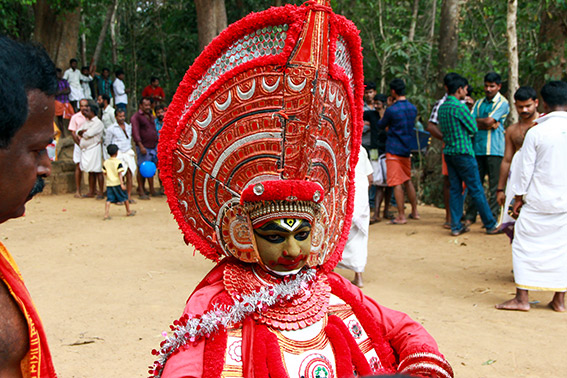
The facial makeup of Vishnumoorthi Theyyam is especially striking and artistically refined. The performance vividly expresses the fierce moment when Narasimha tears open Hiranyakashipu’s chest while seated on his lap and drinks his blood, while also blessing Prahlada. It is believed that the deity later traveled to Kottappuram by mounting the sword of his devotee Palantayi Kannan, where he manifested and began to be worshipped in Theyyam form. In many sacred groves, regardless of which deity is the main presiding figure, Vishnumoorthi is often present as an important subsidiary deity on the right side of the shrine.
This Theyyam is regarded as the living presence of Lord Narahari (Narasimha), an aspect of Lord Narayana, who protects devotees during rituals, conflicts, hunts, and community gatherings, symbolizing courage and divine justice.
Traditionally, the Malayan community performs Vishnumoorthi Theyyam, though members of the Pulaya community also perform it in some regions. It is believed that the first performer of this Theyyam was a Malayan named Palayi Pereppen.
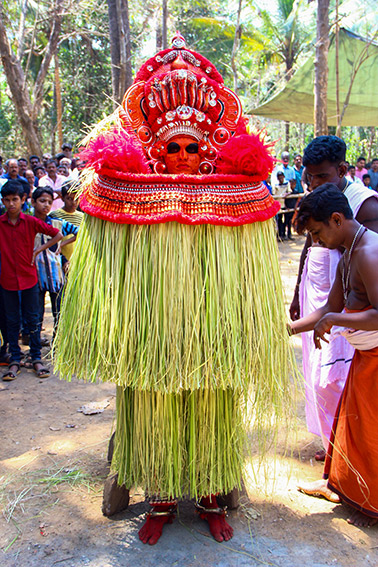
The costume and preparation of Vishnumoorthi Theyyam are distinctive and symbolic. Dark eye makeup is applied, and turmeric powder is spread across the face. A white headcloth is tied firmly, and a long red silk garment extends from the head down to the waist. Above this, a decorative headpiece is fixed and adorned with wild forest flowers. Bracelets made from polished wood and embedded with shining beads decorate both arms, while anklets with bells complete the powerful ritual appearance of the performer. Together, these elements create a majestic and awe-inspiring visual presence during the performance.