



Description
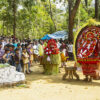
This striking cultural photograph captures a powerful moment from the ancient ritual tradition of Theyyam, one of the most visually spectacular and spiritually significant performance arts of Kerala, India. The image features two iconic Theyyam forms performing together: Vishnu Moorthi Theyyam on the left and Raktha Chamundi Theyyam on the right. Both characters represent powerful deities and mythological figures deeply rooted in the ritual traditions of the Malabar region of northern Kerala.
Theyyam is not merely a dance but a sacred ritual that combines performance, devotion, mythology, and community worship. Practised primarily in the districts of Kannur and Kasaragod, Theyyam ceremonies take place in temple courtyards and sacred groves known as kavu. During these performances, the artist undergoes an elaborate transformation through costume, face painting, and ritual preparation, symbolically becoming the deity they represent. Devotees gather to witness the ritual, seek blessings, and connect with the spiritual energy embodied by the performer.
In this photograph, the performer on the left represents Vishnu Moorthi Theyyam, a powerful manifestation associated with the Hindu god Vishnu. Vishnu Moorthi Theyyam is believed to represent divine justice and protection. The performer’s costume is vibrant and dramatic, featuring elaborate red headgear, ritual ornaments, and a skirt made of natural coconut leaves or grass, which adds movement and texture to the performance. The energetic dance movements of Vishnu Moorthi Theyyam often symbolise the destruction of evil and the restoration of cosmic balance.
On the right side of the image stands Raktha Chamundi Theyyam, another powerful and visually striking form of Theyyam. Raktha Chamundi represents the fierce goddess Chamundi, associated with the destruction of demons and negative forces. The costume is characterised by an enormous circular headgear structure richly decorated with intricate patterns, vibrant colours, and symbolic motifs. The dramatic facial makeup and bold red tones symbolise divine power, energy, and the goddess’s fierce protective nature.
The contrast between the two Theyyam forms creates a dynamic visual composition. Vishnu Moorthi’s energetic posture and flowing costume complement the monumental presence of Raktha Chamundi’s elaborate headgear and regal stance. Together they represent two different aspects of divine power within Kerala’s ritual traditions—protection and justice embodied by Vishnu Moorthi, and the fierce, transformative power of the goddess represented by Raktha Chamundi.
Beyond the performers themselves, the surrounding environment also plays an important role in the ritual atmosphere. The performance takes place in an open temple ground, where villagers and devotees gather to witness the sacred dance. The audience forms a natural circle around the performers, creating a sense of communal participation and spiritual connection. The presence of trees and natural surroundings reflects the traditional setting of many Theyyam rituals, which are often performed in sacred groves that have been preserved for centuries.
Theyyam is recognised as one of India’s most remarkable examples of living ritual art, combining elements of theatre, dance, costume design, music, and spiritual devotion. Each Theyyam form has its own mythology, costume style, and ritual significance, passed down through generations of performers who dedicate their lives to preserving this cultural heritage.
This photograph captures the extraordinary visual richness of Theyyam—the brilliant colours, intricate costume craftsmanship, dramatic gestures, and powerful spiritual symbolism. It offers viewers a glimpse into the vibrant ritual culture of Kerala and the deep connection between art, faith, and community.
For collectors and admirers of cultural photography, this image represents more than a moment in a performance; it is a documentation of a living tradition that continues to thrive in the temples and villages of northern Kerala. The dynamic presence of Vishnu Moorthi and the majestic form of Raktha Chamundi together create a compelling visual narrative that celebrates the timeless beauty and spiritual power of Theyyam.
Warrior Goddesses
In the ritual traditions of North Kerala, several powerful female deities such as Kali, Chamundi, and Bhagavathi are believed not only to be destroyers of demonic forces but also divine beings who actively took part in earthly battles and conflicts. According to local belief, goddesses like Ankakulangara Bhagavathi, Raktha Chamundi, Chooliyar Bhagavathi, Moozhalam Kuzhi Chamundi, and Oravankara Bhagavathi, along with male warrior deities such as Kshetrapalakan, Vairajathan, Vettaykkoru Makan, Pada Veeran, and Vishnumoorthi, all participated in mythic wars to protect righteousness and restore balance.
During a stage of the ritual performance known as uranjaattam, certain Chamundi Theyyams appear wearing a boar-faced mask. These include Madayil Chamundi, Kundora Chamundi, Karimanam Chamundi, and Chamundi (Vishnumoorthi form). Because of this animal symbolism, these forms of Chamundi are sometimes also grouped among deities associated with animal energy and primal protective forces.
Chamundi (Kali) and Raktha Chamundi
Chamundi is believed to have emerged from the divine eye of Goddess Durga to destroy the demons Chandan and Mundan. After defeating them, she also destroyed the powerful demon Raktabeeja, earning the name Raktha Chamundi (“the blood-soaked Chamundi”). In another legend, the same divine mother took the form of Chamundi to defeat the demon Ruru. Using her trident, she separated his head and skin from his body and destroyed him. Because she carried these as symbols of victory, she came to be known again as Chamundi. The idol installed at the Thirumandhamkunnu Temple represents the goddess in this fierce form.
Raktha Chamundi is also believed to be a fierce manifestation of Bhadrakali, born as a partial incarnation of Goddess Parvati. She is the principal clan deity of the Moovari community and is also worshipped under the name Ayiram Thengil Chamundi. Traditionally, this Theyyam is performed by the Malayan community.
A popular legend connects the goddess to a time when severe floods devastated the hill regions, and famine spread across the land. The local people approached Kolathiri Thampuran, their ruler, for help. The king prayed deeply to Annapoorneshwari, the goddess of nourishment. In response, the goddess, along with six mother goddesses, arrived by boat carrying seeds of tubers and paddy to restore fertility to the land. They reached the shore at Ayiram Thengil, where the king and his attendants welcomed them with reverence and performed rituals.
After drinking tender coconut water offered to quench her thirst, Annapoorneshwari threw away the coconut shell. When the shell rolled and stopped at a nearby place, she declared that she wished to reside there. Thus, a temple was established for her at Cherukunnu. Among the accompanying goddesses, Raktha Chamundi became especially dear to the Moovari community, who traditionally gathered flowers for temple worship, and she eventually became their family deity.